International Transfer Pricing Workshop in Milan: Valente Associati GEB Partners/Crowe Valente meets the MACTC delegation once again
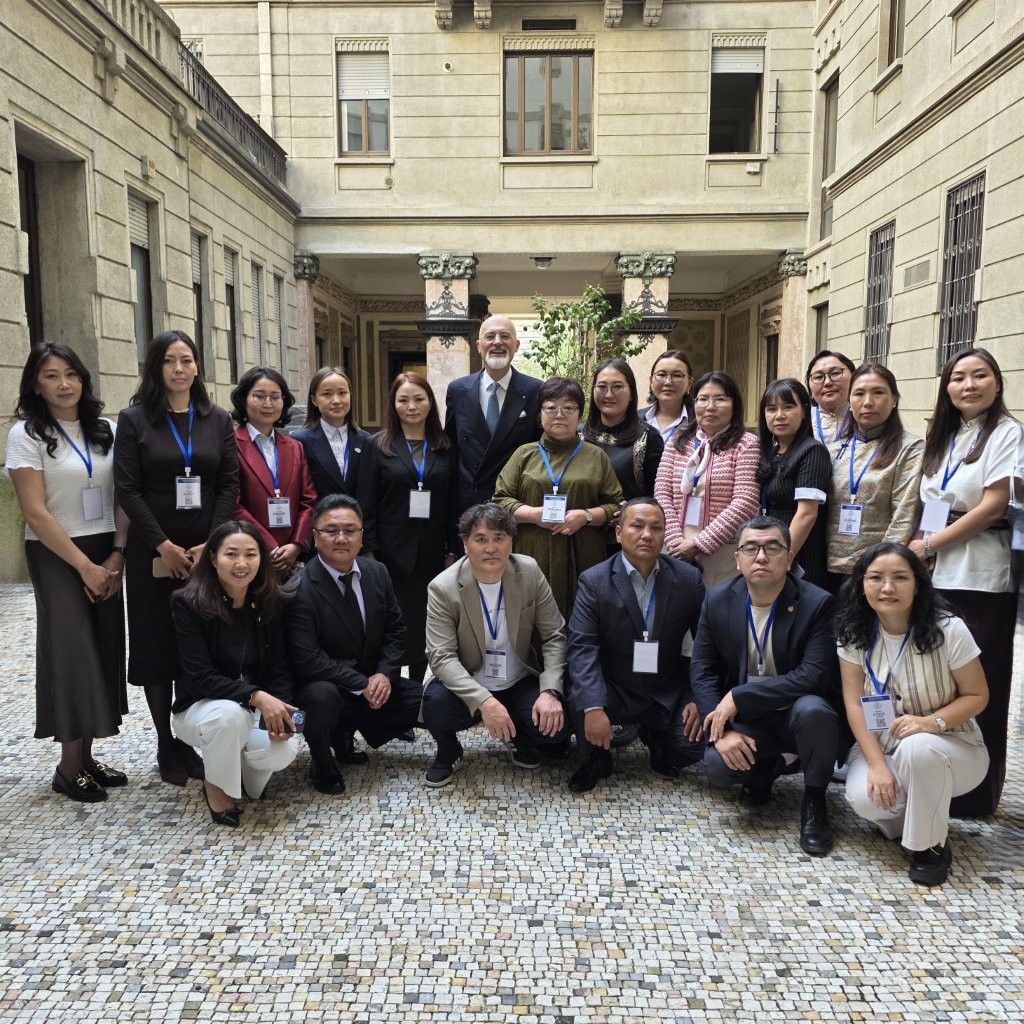
Milan hosted a new international forum focused on transfer pricing and international taxation. A specialized workshop was held at the International Research Center of Valente Associati GEB Partners/Crowe Valente, attended by a delegation of 23 tax professionals from the Mongolian Association of Certified Tax Consultants (MACTC).
This initiative is part of an ongoing collaboration and professional exchange with the MACTC, underscoring the commitment of Valente Associati GEB Partners/Crowe Valente to promoting specialized training and international dialogue on the most pressing tax issues.
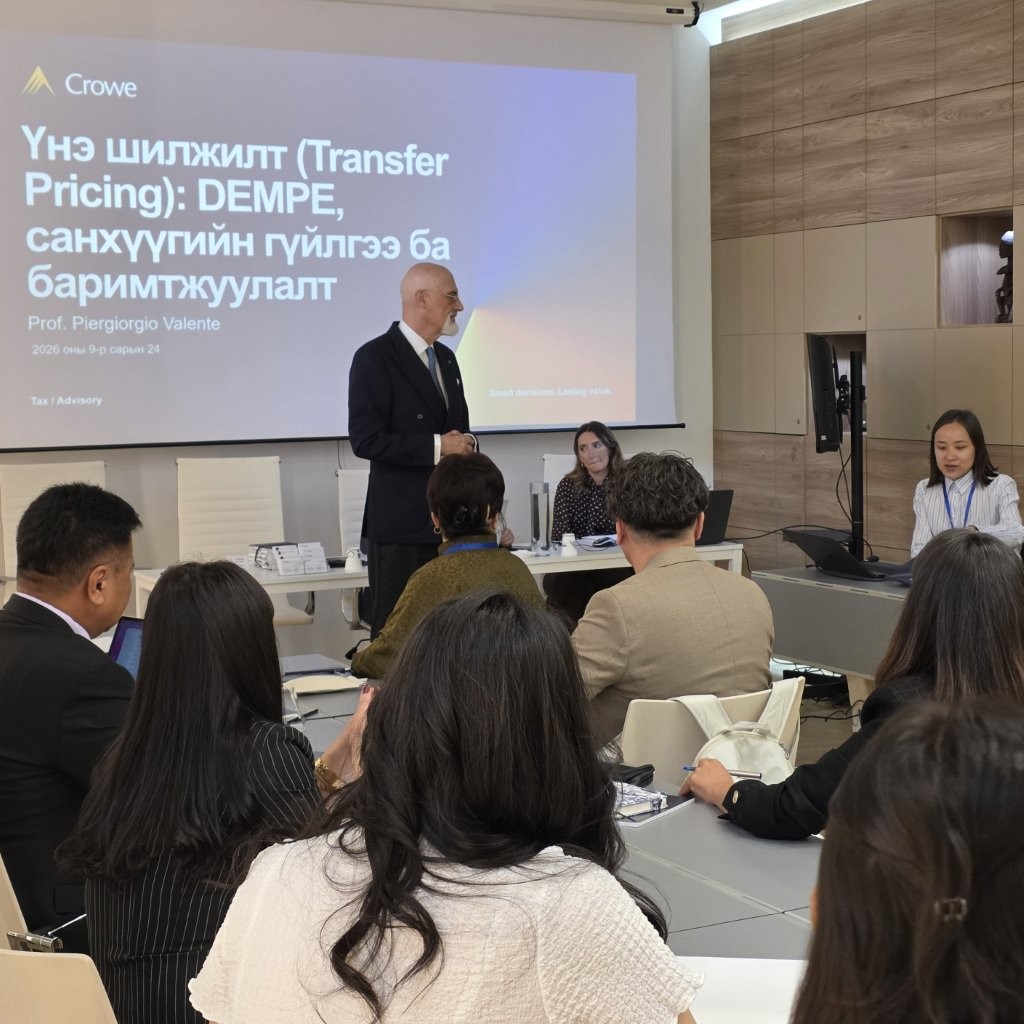
The sessions were led by Prof. Piergiorgio Valente, who—along with his colleagues Federico Vincenti, Carola Valente Della Rovere, and Sara Parillo—guided the participants through an in-depth exploration of transfer pricing. The discussion focused specifically on the relationship between value creation, economic substance, financial transactions, and documentation. Titled “Transfer Pricing: DEMPE, Financial Transactions & Documentation,” the workshop combined theoretical principles with practical applications and case studies involving international structures. Throughout the day, several key topics in international transfer pricing management were addressed, including:
• the arm’s length principle and comparability analysis;
• value creation, FAR (functions, assets, and risks) analysis, and DEMPE (development, enhancement, maintenance, protection, and exploitation) functions, with a particular focus on the appropriate allocation of returns derived from intangibles;
• intra-group financial transactions, including financing, cash pooling, and guarantees;
• transfer pricing documentation in accordance with the OECD BEPS Action 13 framework;
• audit readiness, governance, and the preparation of evidence consistent with the economic substance of transactions.
Special attention was given to the principle that the allocation of profits must reflect the functions actually performed, the assets used, and the risks assumed and controlled—as well as the importance of ensuring alignment between contracts, actual conduct, and documentation. Regarding financial transactions, the “delineate, price, evidence” approach was examined in depth, highlighting the need to assess the substance of a transaction, risk control, realistically available alternatives, and market benchmarks.
The workshop served as a valuable opportunity for technical discussion and the exchange of experience between Europe and Mongolia. It fostered dialogue on international best practices and explored how businesses and professionals can navigate a tax landscape increasingly focused on transparency, economic substance, and governance.
This meeting reaffirms the value of the collaboration with the Mongolian Association of Certified Tax Consultants and underscores the role of international training as a tool for developing expertise, sharing insights, and strengthening relationships among professionals operating within different tax systems.
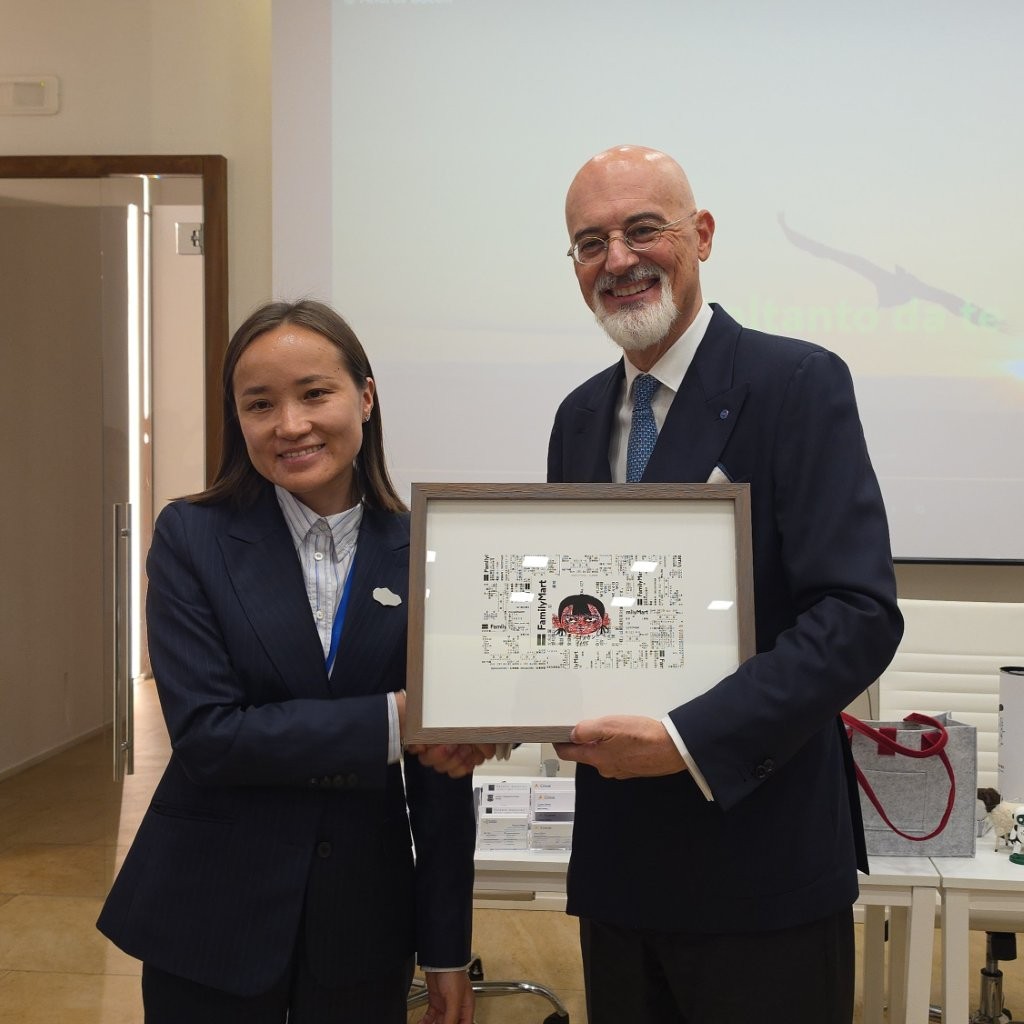
Special thanks go to MACTC and the 23 professionals in the delegation for their active participation, their input and their valuable contribution to the success of the initiative.